Alcohol Awareness Month in Wisconsin: Rethinking What’s “Normal” When Drinking
Alcohol Awareness Month isn’t about telling people what they should do, it’s about helping you make informed, supported decisions about your relationship with alcohol.

Get gentle monthly support and mental health tips from the HEART Counseling team — direct to your inbox.
Alcohol Awareness Month Hits Close to Home in Wisconsin
April is Alcohol Awareness Month. It is a time to practice self-reflection, increase understanding, reduce stigma, and offer support for alcohol use and recovery.
Here in Wisconsin, the topic of alcohol carries a different weight.
Wisconsin consistently ranks among the heaviest-drinking states in the U.S., with 41 of the top 50 heaviest-drinking counties located in the state. For many people in Madison and across Wisconsin as a whole, alcohol is deeply woven into our social lives, with tailgates, days on the lake, food and art festivals, concerts, and even daily stress relief.
Because alcohol is everywhere and at most adult events and outings, it can be hard to tell what “normal” drinking looks like, what is risky, and when alcohol is actually affecting your mental health.
The Power of Normalization (and Why It Matters)
One of the biggest challenges in Wisconsin isn’t just alcohol use, it’s how normalized it is. Liquor shops and bars are everywhere. Excessive drinking is a point of pride for many of our residents!
This serves to. . .
- Blur the line between social and problematic use
- Make it harder to recognize when something feels off
- Increase the pressure to “keep up” socially
- Reduce the likelihood that people will seeking support
If you’ve ben stuck in a rut, or feeling confused, you might find yourself thinking. . .
- “Everyone drinks this much.”
- “This is just what weekends look like.”
- “It’s not a problem. It’s just how people here unwind.”
And yet, the next day many people also notice. . .
- Increased anxiety
- Trouble sleeping
- Feeling more emotionally reactive or low
- They have been using alcohol more often than they intended
- They drank more they intended
These experiences are more common than people talk about, and they matter.

Sometimes the impact of alcohol shows up after the moment has already passed.
Alcohol and Mental Health: What Often Gets Missed
Alcohol is often seen as a way to relax or cope. And in the short term, it can help us to do just that.
But biologically, alcohol is a central nervous system depressant. This means that it impacts your nervous system and brain chemistry in ways that can increase. . .
- Anxiety
- Depression
- Irritability
- Disruptions to sleep
So. . . what should you be aware of?
According to the National Institute on Alcohol Abuse and Alcoholism (NIAAA), Alcohol can interfere with mood regulation and make existing mental health concerns more intense over time.
Similarly, the National Institutes of Health (NIH), discusses how alcohol affects brain function, decision-making, and emotional regulation.
Additionally, the Substance Abuse and Mental Health Services Administration (SAMHSA), provides guidance on recognizing risky use and finding support:
These aren’t abstract risks. They often show up in very real ways, like feeling more anxious after social events, “needing” alcohol to unwind instead of choosing it, and noticing your mood depends on whether you drank.
Less Known but Important Facts About Alcohol and Drinking
When we talk about alcohol use, there are a few lesser-known but important facts that can make a real difference in how you understand your limits and your mental health.
One of the most overlooked concepts is what actually counts as a “standard drink.” In the U.S., a standard drink contains about 14 grams of pure alcohol, which looks like . . .
- 12 oz of beer (around 5% alcohol)
- 5 oz of wine (around 12% alcohol)
- 1.5 oz of distilled spirits (around 40% alcohol)
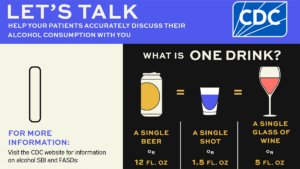
Different drinks can contain the same amount of alcohol. Understanding standard drink sizes helps you track intake more accurately.
In reality, many drinks (especially at restaurants, bars, or social gatherings in Madison and across Wisconsin) exceed this amount of alcohol.
That means someone may believe they’ve had “2 drinks,” when physiologically, it’s closer to 3 or 4. This gap between perception and actual intake can increase your risk of becoming overly intoxicated, injured, or getting alcohol poisoning.
Also, another important fact is that carbonated alcoholic drinks cause faster intoxication.
Beverages like hard seltzers, beer, or mixed drinks with soda increase gastric pressure, which can speed up alcohol absorption into the bloodstream. In practical terms, this means you may feel the effects more quickly, even if the number of standard drinks hasn’t changed.
Source: Levinthal, C. F. (2005). Drugs, behavior, and modern society (4th ed.). Pearson Education New Zealand.
Moreover, how you drink matters just as much as what you drink.
- Drinking on an empty stomach leads to faster absorption and higher blood alcohol levels
- Drinking quickly doesn’t give your body time to metabolize alcohol between drinks
- Body size, metabolism, and biological sex all influence how alcohol is processed
Source: Levinthal, C. F. (2005). Drugs, behavior, and modern society (4th ed.). Pearson Education New Zealand.
Also, there’s also a timing piece that often goes unnoticed. Alcohol begins impairing judgment before people feel fully intoxicated. This means that your decisions, like continuing to drink beyond your intended limit, can happen before you consciously register how impaired you are.
Source: Levinthal, C. F. (2005). Drugs, behavior, and modern society (4th ed.). Pearson Education New Zealand.
Thus, alcohol use is about understanding:
- What a standard drink actually is
- How different types of drinks affect absorption
- How context (food, pace, environment) changes your experience
In a state like Wisconsin, where drinking culture is deeply normalized, having this kind of information isn’t about restriction—it’s about making informed, self-directed choices that align with your mental and physical well-being.
Tools to Help Understand What you are Actually Consuming
If you’re curious about what you’re actually consuming, these tools can help. . .
These resources can offer you a clearer, judgment-free understanding of your alcohol intake.
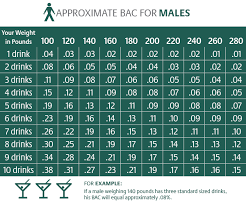
Understanding how standard drinks and body weight affect BAC can help you make more informed choices about alcohol use.
Signs It Might Be Worth Checking In With Yourself
You don’t need to hit a crisis point to reflect on your relationship with alcohol.
Some indicators to pay attention to include . . .
- Drinking more often or more than you planned
- Using alcohol to cope with stress, anxiety, or loneliness
- Difficulty cutting back
- Feeling worse mentally after drinking
- Others expressing concern (even subtly)
None of these mean something is “wrong” with you.
They’re simply signals worth listening to.
Support Is Available, Both Nationally and Here in Madison Wisconsin
If you’re exploring your relationship with alcohol, you don’t have to do it alone.
National Resources:
- SAMHSA National Helpline (free, confidential): 1-800-662-HELP
- SAMHSA Treatment Locator
- NIAAA Alcohol Treatment Navigator
Local Madison & Dane County Resources:
- Journey Mental Health Center
- Safe Communities of Madison-Dane County
- UW Health Behavioral Health Services
- Dane County Human Services
These organizations offer a range of support, from education to treatment to harm-reduction approaches.
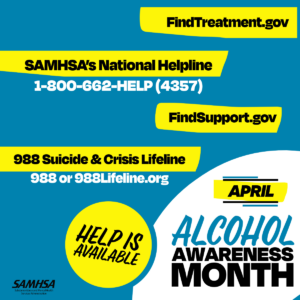
Help is available. National resources offer confidential support for substance use and mental health.
A More Compassionate Way to Look at Alcohol Use
Alcohol Awareness Month isn’t about labeling or judging. It’s about asking yourself. . .
- What role does alcohol play in my life right now?
- How does it actually affect my mood, sleep, and relationships?
- Do I feel in control of my choices, or am I reacting to stress, pressure, anxiety, depression, or habit?

Sometimes alcohol becomes part of how we cope, unwind, or get through the day, often without us realizing it.
How Therapy Can Help
At HEART Counseling in Madison, WI, we often work with teens and adults who are . . .
- Navigating stress, anxiety, or depression
- Exploring their relationship with alcohol without judgment
- Trying to make more intentional choices around coping
In a culture where drinking is deeply normalized, these questions can be powerful. Sometimes, having space to explore them with a therapist can make a meaningful difference.
How Can We Help?
However, we do not offer addiction treatment services here at HEART Counseling LLC, but we frequently work with clients who are using alcohol to cope with underlying stressors, mental health challenges, or past or current traumatic experiences. We work with our clients to address the root cause of drinking behavior. Then we collaborate with our clients to explore and develop new, healthier coping mechanisms, allowing you to grow out of and move past unhealthy coping mechanisms.

Alcohol can feel tied to emotion, connection, and coping, sometimes in ways we don’t fully notice.
Therapy isn’t about being told what to do.
It’s about understanding yourself more clearly, and having support while you figure out what feels right for you.
Looking for a therapist to start this journey with? Find out more about our therapists HERE!
Ready for extra support? Meet with one of our Madison therapists and start your next chapter.
Share this story...
Heart Counseling is a team of therapists specializing in helping kids, teens, and adults with anxiety and anyone who has experienced an upsetting event. Our mental health therapists are also passionate about perinatal mental health and helping parents at all stages. From kids to adults, we are dedicated to helping you and your family thrive.