
Cognitive Behavioral Therapy (CBT) in Madison, WI
Evidence-based therapy for anxiety, depression, stress, and more.
Cognitive Behavioral Therapy (CBT) has long been considered the “gold standard” in the treatment of anxiety, depression, and trauma/PTSD – plus a host of other mental health diagnoses.
At HEART Counseling, we offer compassionate, individualized therapy in Madison, Wisconsin, and online throughout Wisconsin. Our therapists use evidence-based approaches, including CBT, to support clients experiencing anxiety, depression, stress, and other mental health concerns.
Do you find yourself caught in cycles of overthinking, self-criticism, worry, or avoidance? Maybe you know your thoughts aren’t always helpful, but changing how you feel or respond seems easier said than done.
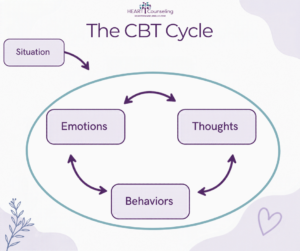
Cognitive Behavioral Therapy (CBT) can help you better understand the connections between your thoughts, feelings, and behaviors. CBT also helps people develop practical skills to navigate life’s challenges.
What is CBT?
Cognitive Behavioral Therapy, commonly called CBT, is a well-researched form of psychotherapy that explores how our thoughts, emotions, physical sensations, and behaviors influence one another.
CBT is based on the understanding that the way we interpret situations can influence how we feel and respond. Sometimes, patterns of thinking or behavior can unintentionally keep us feeling stuck.
Through CBT, you and your therapist work together to recognize these patterns, explore alternative perspectives, and practice skills that support your goals.
CBT isn’t about forcing yourself to think positively or pretending that difficult feelings don’t exist. Instead, it helps you develop more balanced, realistic, and flexible ways of responding to challenges.
How Can CBT Help With Anxiety?
Anxiety can show up in many ways. You might experience racing thoughts, persistent worry, difficulty making decisions, physical tension, or the urge to avoid situations that feel uncomfortable.
CBT for anxiety helps you recognize the patterns that may be maintaining these experiences and develop new ways to respond.
For example, CBT may help you:
An Example of CBT for Anxiety
Imagine you send an important message and don’t receive a response right away.
You might think, “I must have said something wrong. They’re upset with me.”
That thought could lead to anxiety, repeated checking, or an urge to send several follow-up messages.
In CBT, you might explore other possible explanations, such as the person being busy, while also practicing ways to tolerate uncertainty without repeatedly seeking reassurance.
The goal isn’t to convince yourself that everything will always work out perfectly. It’s to develop a more flexible relationship with your thoughts and respond in ways that support your well-being.

Is CBT Effective for Anxiety?
Yes. CBT is one of the most extensively studied psychological treatments for anxiety disorders.
Clinical guidelines from the World Health Organization (WHO) recommend CBT-based interventions for conditions including generalized anxiety disorder and panic disorder.
Research also supports CBT’s ability to help many people reduce anxiety symptoms and improve everyday functioning.
However, no single treatment is the best fit for everyone. At HEART Counseling, we believe evidence-based treatment should also be individualized to your experiences, preferences, and goals.
What Can CBT Help Treat?
CBT has a substantial research base supporting its use for a variety of mental health concerns, including:
CBT can also be adapted to address other concerns. Your therapist can help determine whether CBT is appropriate for your specific needs.
What Does CBT Look Like in a Therapy Session?
CBT is typically collaborative and goal-oriented, but sessions can look different depending on your therapist and what you’re working toward.
You and your therapist may begin by identifying challenges you’d like to address and exploring how thoughts, feelings, and behaviors interact in your daily life.
Together, you might practice recognizing unhelpful thinking patterns, developing coping strategies, experimenting with new behaviors, or gradually approaching situations that cause anxiety.
Your therapist may also suggest exercises or reflections to try between sessions, although these will depend on your goals and treatment plan.
CBT isn’t about being told what to think or what to do. It’s about developing tools that help you understand yourself, your values, and make meaningful changes.
Different Types of Cognitive and Behavioral Therapies
CBT is part of a broader family of cognitive and behavioral treatment approaches. Some related therapies include:
- Cognitive Therapy (CT): Focuses on identifying and evaluating patterns of thinking.
- Cognitive Processing Therapy (CPT): A trauma-focused treatment for PTSD that addresses beliefs connected to traumatic experiences.
- Exposure Therapy: Helps people gradually approach feared situations or experiences in a structured, supportive way.
- Trauma-Focused Cognitive Behavioral Therapy (TF-CBT): A specialized treatment for children and adolescents who have experienced trauma.
- Dialectical Behavior Therapy (DBT): A related treatment approach emphasizing skills such as emotional regulation, mindfulness, and interpersonal effectiveness.
- Acceptance and Commitment Therapy (ACT): A related behavioral approach emphasizing psychological flexibility and values-guided action.
- Systematic Desensitization
These approaches have distinct methods and training requirements. Not every therapist offers every modality.
What Is Trauma-Focused Cognitive Behavioral Therapy (TF-CBT)?
Trauma-Focused Cognitive Behavioral Therapy (TF-CBT) is an evidence-based treatment developed for children and adolescents who have experienced trauma.
TF-CBT recognizes that traumatic experiences can affect emotions, beliefs, behaviors, relationships, and a young person’s sense of safety.

TF-CBT was originally developed to treat PTSD in children who had been sexually abused. Today we know that TF-CBT is effective for children who have experienced many different types of trauma as well as combinations of trauma. TF-CBT recognizes that survivors of trauma experience symptoms of anxiety and depression, in addition to trauma-specific symptoms such as self-blame, safety concerns, and difficulty trusting others and the world in general.
In accordance with a trauma-informed and strengths-based perspective, TF-CBT also works to help children fit the trauma(s) into their lives in such a way that they do not identify themselves as a “victim.”
The main components of TF-CBT include:
- Helping kids learn more about trauma and PTSD, and common responses to distressing experiences.
- Skills for identifying, expressing, and managing emotions.
- Individually tailored stress-management skills, like relaxation and coping strategies.
- Exploring and understanding connections between thoughts, feelings, and behaviors
- Gradual trauma processing, including a trauma narrative when appropriate.
- Creating a trauma narrative is a gradual exposure process where children work with their therapist to “tell the story” of their trauma
- Identifying and challenging negative thoughts and replacing them with healthier ones
- Learning body safety skills and how to identify and respond to unsafe situations
- Involvement of parents or caregivers when appropriate and safe.
Parent Component of TF-CBT
Parents and caregivers can play an important role in TF-CBT. When a child or teen works through TF-CBT, their parent(s) are also seen by the therapist. In separate, parents-only sessions, parents work through therapy modules that parallel those the child receives, with an added focus on parenting skills

TF-CBT is a specialized treatment. Families interested in this approach should specify when reaching out so we can match you with a therapist with the appropriate training.
Finding the Right CBT Therapist at HEART Counseling
Finding the right therapist involves more than choosing a treatment approach or finding the first therapist who accepts your insurance.
Some people prefer a therapist who offers direct feedback, practical strategies, and structured sessions. Others appreciate a gentler pace, more time for reflection, or a combination of approaches.
At HEART Counseling, we thoughtfully consider prospective clients’ needs, preferences, and goals when exploring potential therapist matches.
We also recognize that CBT may be one part of a broader treatment plan. Depending on your needs and your clinician’s training, your therapy may incorporate other approaches.