
What is Burnout? Signs of Work or School Stress and What Helps
As school and workplace deadlines start to ramp up again this fall, you may find yourself feeling increasingly stressed and overwhelmed. Burnout can happen when ongoing responsibilities leave too little time for rest and recovery.
Written By: Savannah Buttermore, LPC-IT

Get gentle monthly support and mental health tips from the HEART Counseling team — direct to your inbox.
It is normal to look for extra support, whether than be from friends, family, or therapy for work stress or burnout, when the stress and overwhelm becomes difficult to manage. Understanding what burnout feels like may help you recognize what you are experiencing and what kind of support you need.
There comes a time when the word “stress” doesn’t feel quite sufficient in describing the emotional burden you are shouldering throughout the day. Burnout may feel like a better term for when your threshold for stress has been exceeded. Burnout may come from feeling exhausted by your job, school, or caregiving responsibilities, where it feels like there are constant expectations you have to meet and not enough time for rest and recovery in between.
Signs of Burnout and Work Stress
Burnout can present in a multitude of ways. However, burnout can affect your energy, emotions, ability to concentrate, and physical well-being. Some common signs include:
- Constantly feeling exhausted
- Feeling detached or emotionally numb
- Struggling to maintain focus or concentration
- Often feeling overwhelmed, anxious, and irritable
- Physical symptoms, including sleep concerns, nausea, headaches, or muscle tension
While these symptoms draw similarities to depression, the causes and treatment differ for the two. Burnout usually occurs when these symptoms relate to a specific stressor, like your job, school, or caregiving responsibilities. These symptoms may be alleviated by having time to rest and recover or setting boundaries within your environment.
However, depression is a clinical condition that may not always have a clear stressor and can impact all aspects of your life. You may notice depression symptoms are not alleviated by a time of rest. If you are unsure what you are experiencing, talking with a mental health professional can help you explore your symptoms and needs.
Sometimes anxiety looks less like shutting down and more like constantly pushing ourselves to keep up.
Three Types of Burnout
Burnout can be a diverse experience, showing up in our bodies in varying ways. There are three core types of school and workplace burnout.
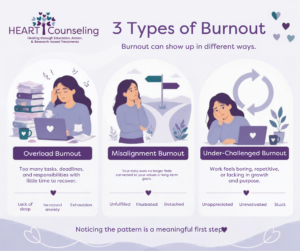
Recognizing which experience feels familiar may help you better understand the source of your stress.
Overload Burnout
With overload burnout, your workload feels unmanageable, and deadlines and tasks are happening at a pace that feels overwhelming. As a result, finding enough time to recover between responsibilities may become difficult. Physical symptoms can look like a lack of sleep, increased anxiety, and feeling exhausted.
Misalignment Burnout
Misalignment burnout can happen when your long-term goals and core personal values are misaligned with your daily job tasks or career as a whole. Over time, this disconnect can affect how connected you feel to your work. Common signs may include feeling unfulfilled, frustrated, and detached from your work.
Under-Challenged Burnout
Under-challenged burnout may occur when your schoolwork or daily work tasks feel boring, repetitive, or lack growth opportunities. Therefore, you may struggle to feel connected to the purpose of what you are doing. Common signs may include feeling unappreciated, unmotivated, or stuck.
Small Steps for Navigating Burnout
Acknowledging you are experiencing burnout may feel like just another task on top of everything else. When navigating burnout, it is essential to start with small, feasible steps. You might begin by:
- Allowing yourself to acknowledge you are feeling burnt out
- Carving out time for breaks and finding rest
- Getting outside, watching your favorite TV show, or listening to music
- Finding emotional support in friends, community groups, or a mental health professional
- Delegating tasks when needed
- Setting accessible and realistic boundaries around your stressor
- Building self-care into your daily routine
- Finding fulfilling hobbies outside of your responsibilities
You do not have to make every change at once. Instead, consider which small step feels accessible with the energy and resources you have right now. Creating a little more room for rest, support, or boundaries can be a place to begin.
Elise Reichle, SWTC, another therapist here at HEART Counseling, believes that the most difficult part of burnout are the first 3 steps towards recovering from burnout. 1. Identifying that we are feeling “burnt out”, 2. Accepting that we are experiencing burnout, and 3. Being kind to ourselves and forgiving ourselves for feeling the way we do, and giving ourselves the grace, permission, and space to begin to heal.
When to Consider Work Stress Therapy if you are in Madison or anywhere in Wisconsin
This discussion around burnout serves as a reminder that your worth isn’t defined by how many things you can check off your to-do list.
Burnout is a real experience that, if left unaddressed, can contribute to other mental health struggles. Moreover, ongoing stress can make it harder to find the energy needed to make changes on your own.
Talking to a mental health provider about boundary-setting, self-advocacy tools, and coping skills for emotional regulation can help prevent burnout from progressing further. If rest no longer feels sufficient for you to be able to continue to function at work or school, it may be time to look for a therapist near you that has experiencing working with clients navigating work stress or school stress.
You don’t have to navigate burnout alone. Therapy can offer space to process stress and find support.
Therapy can provide space to understand what is contributing to your stress while exploring changes that feel realistic within your life. It is okay to ask for help and support.
Ready for extra support? Meet with one of our Madison therapists and start your next chapter.
Additional Resources for Burnout
7 Podcasts to Help You Navigate Burnout
Strategies to Prevent Burnout at Work Podcast
7 Books to Help You Battle Burnout
About the Author
Savannah Buttermore, LPC-IT, is a psychotherapist at HEART Counseling in Madison, Wisconsin. savannah meets with clients throughout Wisconsin via telehealth, as well as in-person in West Madison. Savannah works with preteens, teens, young adults, and adults navigating anxiety, depression, trauma, school struggles, and major life transitions. She values creating a safe, genuine, and nonjudgmental environment where clients feel seen and heard.
Share this story...

Heart Counseling is a team of therapists specializing in helping kids, teens, and adults with anxiety and anyone who has experienced an upsetting event. Our mental health therapists are also passionate about perinatal mental health and helping parents at all stages. From kids to adults, we are dedicated to helping you and your family thrive.