
My Journey to Becoming a Therapist: Authenticity Over Perfection
For those seeking therapy for perinatal mental health, anxiety, and OCD, HEART is excited to introduce our newest member!
KK will join us this Fall as a Graduate intern. KK will be at HEART Counseling while she completes her Masters of Social Work (MSW) degree through UW–Madison. KK’s professional and personal experiences have shaped her approach to mental health. KK’s approach is defined by collaboration, compassion, and the belief that everyone deserves a space where they feel heard, accepted, and supported. Welcome KK!

Get gentle monthly support and mental health tips from the HEART Counseling team — direct to your inbox.
Written By: KK Kothe, Graduate Intern at HEART Counseling who has a passion for working with clients navigating women’s & perinatal mental health, anxiety, OCD, and perfectionism.
My Path to Becoming a Therapist
My path to becoming a therapist has been shaped by my professional experiences, personal challenges, and the belief that mental health should feel less isolating.
Currently, I am completing my Master’s Degree in Social Work (MSW) at UW–Madison. I also work at UW–Madison on the Suicide Prevention and Mental Health Promotion Team. As a part of this team, I help develop resources and initiatives that support college student well-being.
Through my work, I have seen how powerful it can be when mental health is approached as a shared responsibility. People shouldn’t have to struggle on their own. Supportive relationships, accessible resources, and compassionate communities all play an important role in healing.
My Interest in Women’s & Perinatal Mental Health Therapy
In addition to my work in mental health, I have experience in the field of surrogacy. This introduced me to the emotional complexity of fertility, pregnancy, family building, and postpartum life.
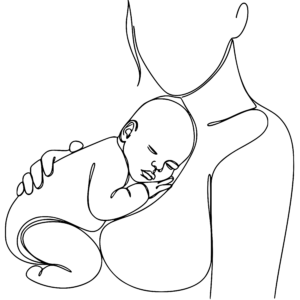
Pregnancy, postpartum life, and family building can bring joy and connection alongside complex emotions, uncertainty, and change.
These experiences involve joy and connection, as well as grief, changing relationships, medical stress, and complicated feelings about the body. This work has helped me recognize how important it is for people to have space to speak honestly about reproductive and perinatal experiences. Perinatal mental health therapy requires creating a safe space for others to share experiences without judgment or pressure.
My interest in women’s health is also personal. Navigating unexplained health concerns and the possibility of endometriosis has shown me how closely physical and mental health are connected.

Mental and physical health are deeply connected, and both can shape how we experience stress, uncertainty, and change.
Pain, medical uncertainty, changes in functioning, and feeling unheard impacts our mood, identity, relationships, and trust in our bodies. I consider all of these interconnected factors and systems with respect to perinatal mental health.
These experiences influence my compassion for people navigating health concerns. However, I also recognize that each person’s experience is different.
My role as a therapist is not to assume that I understand someone’s story because of my own. It is to listen carefully, remain curious, and support clients in identifying what their experience means to them.
Understanding Anxiety, OCD, and Perfectionism
I have also been diagnosed with OCD. Despite the challenges it brings, I enjoy learning about how it influences thought patterns, decision-making, and the desire for control.
My experience has helped me understand how convincing anxious thoughts can feel. I also understand how easily the pursuit of certainty can begin to limit a person’s life. It has also strengthened my interest in helping people develop a different relationship with their thoughts rather than believing they must eliminate every uncomfortable feeling.
I value authenticity over perfection, both personally and professionally.

Growth is not always organized or predictable, and meaningful change can take many forms.
Growth is not organized or predictable. Sometimes it requires us to tolerate uncertainty, change plans, or set boundaries. Sometimes, in order to grow, we may need to ask for help, allow ourselves to rest, or making an imperfect decision that reflects what matters most to us.
My Approach to Therapy
My approach is collaborative, warm, and grounded in curiosity. I believe clients are the experts on their own lives, and I view therapy as something we do together. I aim to create a space where clients speak honestly, explore difficult patterns, recognize strengths, and live meaningful, authentic lives.

Therapy can offer space to show up as you are, explore difficult experiences, and move toward a life that feels meaningful and authentic.
Mental health struggles often tell people that they are alone, failing, or falling behind.
Therapy can offer a different message: You’re a person responding to real experiences, and you deserve support while working through them.
As I begin my work at HEART Counseling, I feel grateful for the opportunity to learn from my clients and support them through difficult moments and meaningful growth. You do not need to have everything figured out before reaching out. You are welcome to begin exactly where you are.
Ready for extra support? Meet with one of our Madison therapists and start your next chapter.
About the Author
KK is a graduate student completing her final year of the Master of Social Work (MSW) program at the University of Wisconsin School of Social Work. She has experience in suicide prevention, mental health promotion, community mental health, and surrogacy. Additionally, KK is passionate about creating a warm, collaborative space where clients feel genuinely heard, accepted, and supported.
Share this story...

Heart Counseling is a team of therapists specializing in helping kids, teens, and adults with anxiety and anyone who has experienced an upsetting event. Our mental health therapists are also passionate about perinatal mental health and helping parents at all stages. From kids to adults, we are dedicated to helping you and your family thrive.