
Women’s Mental Health | Mental Load, Invisible Labor, and the Second Shift
Women’s mental health support starts with recognizing the responsibilities women carry, including the mental load and invisible labor often overlooked in everyday life.
Written By: Abby DeRoche, APSW

Get gentle monthly support and mental health tips from the HEART Counseling team — direct to your inbox.
Many women carry a lot for their families, homes, relationships, jobs, and sometimes even for their communities. Some of us take on these responsibilities because we genuinely want to. These responsibilities might feel natural, meaningful, or part of who we are.
For others, it’s something we’ve slowly taken on over time without even noticing.
What Is Mental Load?
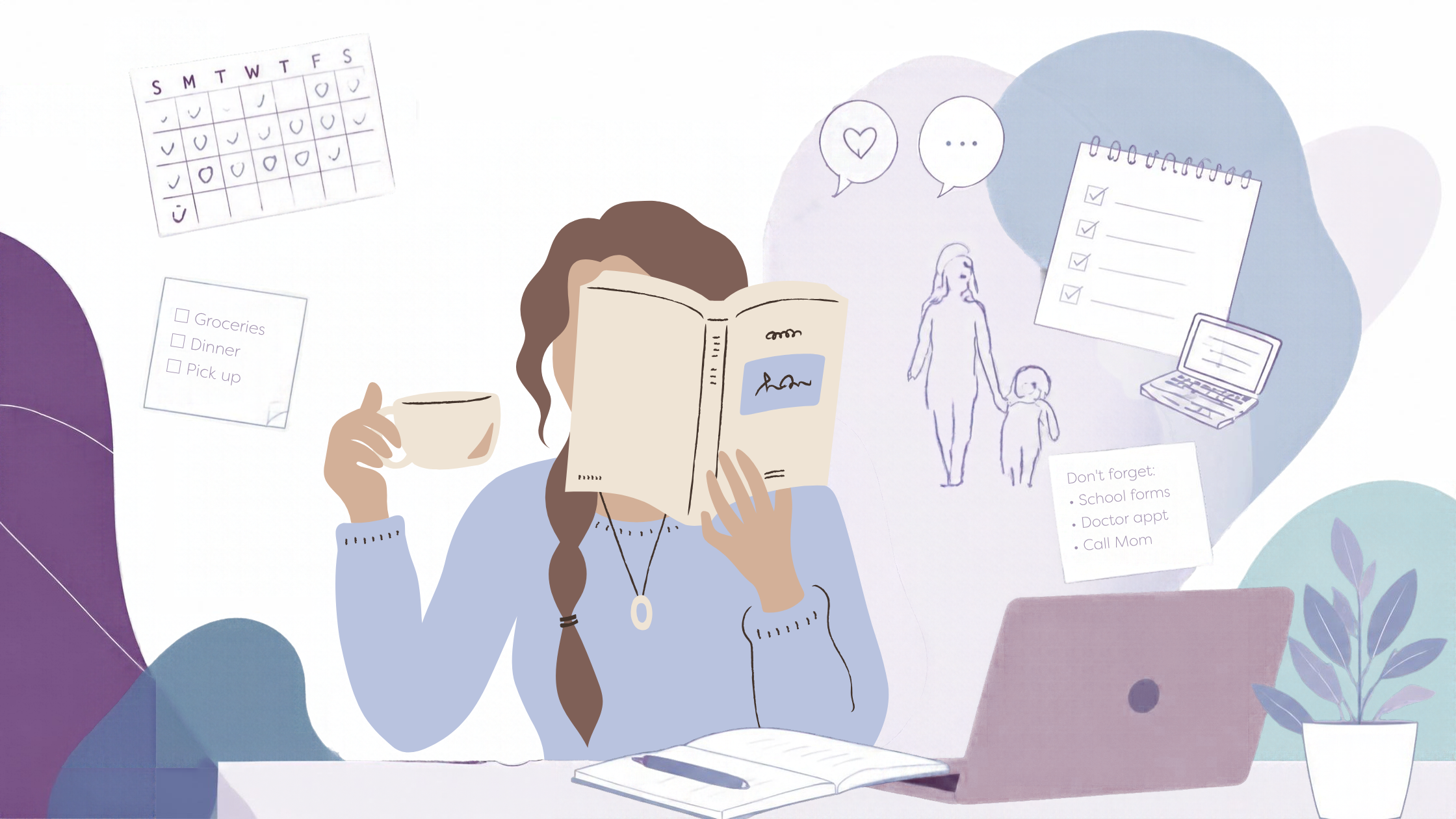
Mental load, also called invisible labor, is the constant thinking, planning, and emotional monitoring that keeps life running smoothly. Researchers describe it as a mix of managerial, cognitive, and emotional household labor (Wayne et al., 2023). These tasks often happen quietly in the background, but they require energy.
The Three Types of Mental Load
- Managerial load: planning, organizing, directing, supervising, and delegating work.
- Cognitive load: remembering, paying attention, anticipating needs, making decisions, and solving problems.
- Emotional load: worrying about family needs, responsibilities, and well-being.
Invisible labor shows up in small, everyday moments.
The Mental Calendar

Even while focusing on one task, your mind may be managing ten others.
You’re in the middle of a work meeting, contributing something thoughtful and sharp, but part of your brain is simultaneously tracking the pediatrician appointment you still need to schedule. You’re also remembering the birthday gift you haven’t ordered and the school email about “crazy sock day” tomorrow. No one else sees this mental juggling act, but it’s constant.
The Invisible Prep Work
You’re packing lunches at night because you know the morning will be chaos. You’re checking the weather to make sure the kids have the right clothes, remembering which child likes which snack, and mentally planning tomorrow’s drop-off route. It looks like “just packing lunch,” but it’s actually 15 micro-decisions layered on top of each other.

Sharing the mental load begins with recognizing the work that often goes unseen.
The Relationship Manager
You’re finishing a big project at work, mentally exhausted but proud. At the same time, you’re keeping track of the emotional pulse of your relationship, remembering your partner’s stressful meeting, and planning a dinner that feels supportive. You’re also noticing the laundry piling up and thinking about when you last had quality time together.
You’re carrying the invisible work of tending to the relationship, even while performing at a high level professionally.
Mental Load in Women and the “Second Shift”
Sociologist Arlie Hochschild coined the term second shift. The second shift describes how working moms clock out of their paid job only to clock into their unpaid job at home. This second shift can look like caregiving, household management, emotional labor, and the invisible tasks that keep a family running (Hochschild, 2016).
Why Invisible Labor Often Falls on Women
Studies show that invisible labor often falls on women in heterosexual relationships because of gender socialization and stereotypes (Wayne et al., 2023). Traditionally, women were expected to be caregivers and manage the household. As more women entered the workforce, the expectations didn’t disappear; instead, they doubled.
Many women are managing the pressure of excelling at work, keeping the home running, nurturing their relationships, supporting their children, and tending to their own mental health. They’re also trying to maintain a social life. Even delegating takes energy because you have to notice what needs to be done, remember it, and then ask someone else to do it.
Matrescence and Women’s Mental Health

Becoming a mother changes more than your daily routine. It can change how you experience the world and yourself.
Becoming a mother is more than welcoming a baby. It is also a profound transformation for you. This transition, often called matrescence, involves changes to nearly every part of your life, including your body, emotions, relationships, identity, and daily responsibilities (Callaghan et al., 2024).
Every mother’s experience of matrescence is unique. The way you navigate this transition is influenced by many factors, including your personal history, relationships, physical health, cultural background, support system, financial resources, and current life circumstances. Understanding these influences helps us move away from self-blame and toward a more compassionate view of maternal mental health.
Your experience of motherhood is shaped not only by who you are, but also by what you carry and the environment in which you are parenting.
As mothers adapt to these changes, many also take on a significant amount of invisible labor. They often carry the mental load of anticipating needs, managing schedules, organizing household responsibilities, and caring for others. This “second shift” extends far beyond the visible tasks of parenting and can contribute to stress, overwhelm, and emotional exhaustion.
Recognizing these often unseen demands is an important part of understanding maternal mental health and supporting mothers with the care, resources, and compassion they deserve.
Invisible Labor in Relationships and Other Areas of Life
I also want to recognize that mental load isn’t limited to one type of relationship. The imbalance of responsibilities and mental load can show up in LGBTQIA+ couples, roommate situations, friendships, caregiving relationships, and sibling dynamics. There may also be circumstances that put certain populations at a higher mental load than others.
People of color may be navigating racism or a higher level of social expectations on top of managing everyday life. Single parents may not have the choice to split up the mental load, taking all of it on by themselves while also providing for the family. Whatever cards you are dealt, it can be unfair, and it’s important to validate and bring compassion into those parts of you facing unfair situations.
Paths to Reduce the Mental Load
1. Ask for Help
Asking for help is not always easy, especially when you’re used to carrying so much on your own. Yet sharing the weight of mental load can be far more sustaining than carrying it by yourself. Consider sharing this post with your partner, not as criticism or blame, but as an invitation into understanding.
Let them see the work that often goes unseen. Talk openly about what you need. When the invisible becomes visible, it creates opportunities for greater support, connection, and shared responsibility.
If you have limited support, the therapists at HEART Counseling are here for you.
2. Divide Tasks Based on Strengths
Choose what you’re good at, and let others lead in their areas of strength. A helpful tool for this is the Fair Play Card Game, which can make splitting tasks simpler and more specific to each household. The pile of cards is also a way to make invisible tasks visible based on how many cards one partner has.
3. Let Tasks Be Done Differently
It’s okay if someone else does the task in a different way. Your mental health is worth releasing control. We also have to shift our minds out of the pattern of worrying about all the tasks and be willing to have them done differently than we might prefer.
This can be hard to do, and it can take time!
4. Join Support Groups
Community helps you feel less alone and gives you tools to manage stress and overwhelm. There are many free or affordable support groups for women navigating it all. Talking with other women who are going through the same thing can bring comfort and validation.
How Therapy for Mental Load Can Help
Sometimes, recognizing the mental load is only the beginning. Even when you understand how much you’re carrying, changing long-standing patterns or asking for support can feel difficult. Therapy can offer space to explore these expectations, recognize your needs, and practice sharing responsibilities without feeling like you have to manage everything yourself.
At HEART Counseling in Madison, WI, women’s mental health support can include talking through the stress, relationship dynamics, and life transitions connected to invisible labor. You don’t have to wait until you’re overwhelmed to seek support. Your needs matter, too.
Why Talking About Mental Load Matters

You deserve care and support, too. You were never meant to carry everything alone.
By acknowledging these hidden responsibilities and making the invisible visible, we can start to distribute the mental load more evenly and make everyday responsibilities more manageable. When mental load stays invisible, it’s easy for others to underestimate how much work is happening behind the scenes. Even when people do notice, they may look at us and say, “I don’t know how you do it all.”
Sometimes that feels good, and sometimes it feels heavy. You cannot do everything, all at once, perfectly. Even if you try to accomplish everything perfectly, as many of us do, please allow yourself to make mistakes.
Please meet yourself with compassion. Time won’t always align with your plans, and you were never meant to manage everything alone.

Ready for extra support? Meet with one of our Madison therapists and start your next chapter.
About the Author: Abby is a client-centered, trauma-informed therapist at HEART Counseling in Madison, WI, specializing in perinatal mental health, women’s issues, anxiety, trauma, and life transitions. With a background in reproductive and maternal mental health, she brings compassion and curiosity to conversations about identity, relationships, and the often-invisible responsibilities women carry. Abby believes therapy is not about fixing people, but about creating a supportive space where they can reconnect with their strengths and feel understood.
References and Resources
Fair Play
https://www.fairplaylife.com/
Barigozzi, F., Biroli, P., Monfardini, C., Montinari, N., Pisanelli, E., & Vitellozzi, S. (2025). Beyond Time: Unveiling the Invisible Burden of Mental Load.
https://doi.org/10.2139/ssrn.5262808
Callaghan, B. L., McCormack, C., Kim, P., & Pawluski, J. L. (2024). Understanding the maternal brain in the context of the mental load of motherhood. Nature Mental Health, 2(7), 764–772.
https://doi.org/10.1038/s44220-024-00268-4
Dean, L., Churchill, B., & Ruppanner, L. (2021). The mental load: Building a deeper theoretical understanding of how cognitive and emotional labor overload women and mothers. Community, Work & Family, 25(1), 13–29.
https://doi.org/10.1080/13668803.2021.2002813
Hochschild, A. (2016). The Second Shift: Arlie Hochschild. YouTube.
https://www.youtube.com/watch?v=mvzE6zYkEQY
Wayne, J. H., Mills, M. J., Wang, Y.-R., Matthews, R. A., & Whitman, M. V. (2023). Who’s remembering to buy the eggs? The meaning, measurement, and implications of invisible family load. Journal of Business and Psychology, 38(6), 1159–1184.
https://doi.org/10.1007/s10869-023-09887-7
Weeks, A. C., & Ruppanner, L. (2024). A typology of US parents’ mental loads: Core and episodic cognitive labor. Journal of Marriage and Family, 87(3), 966–989.
https://doi.org/10.1111/jomf.13057
Share this story...

Heart Counseling is a team of therapists specializing in helping kids, teens, and adults with anxiety and anyone who has experienced an upsetting event. Our mental health therapists are also passionate about perinatal mental health and helping parents at all stages. From kids to adults, we are dedicated to helping you and your family thrive.